
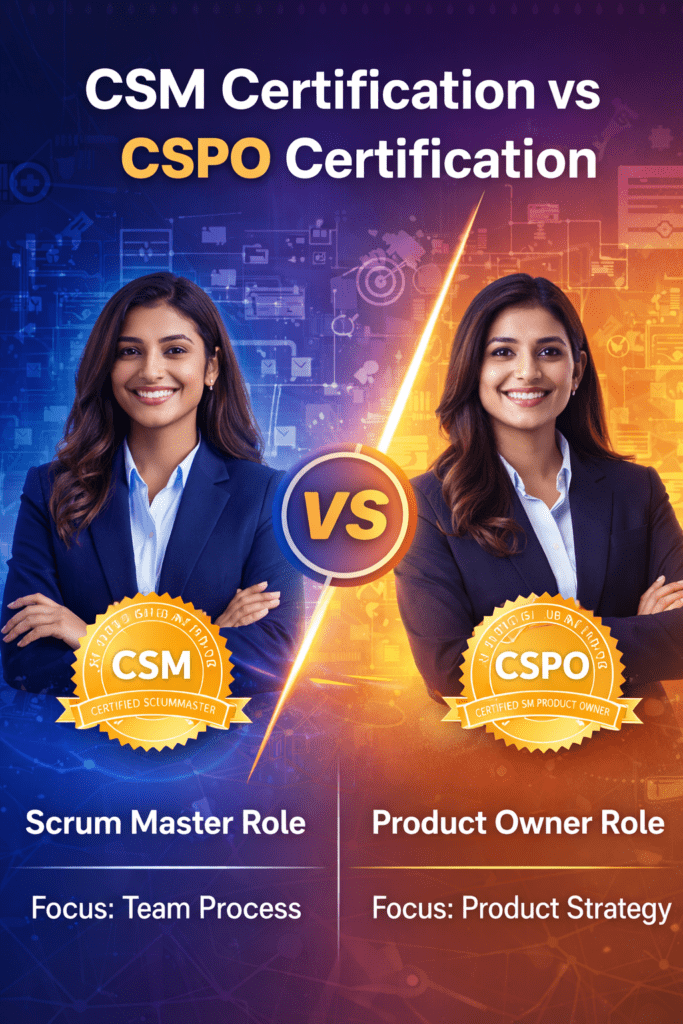
CSM or CSPO – What Matches Your Career Path?
Right now, you might be facing a moment that shifts everything about where you’re headed at work.
Perhaps you have spent several years on the job, then began considering what comes next. Then again, watching others learn new things and step into bigger positions might have sparked a thought
“Should I also learn something new?”
Now and then, it begins plain. A person speaks offhand:
“You should look into Agile certifications.”
Out of nowhere, research begins. Options line up side by side, waiting. One thing becomes clear – clarity matters most when planning ahead.
A fresh look at CSM versus CSPO begins by tracing their roots. One stems from Scrum Alliance, the other from a different branch of Agile thinking. Each takes its place within team workflows differently. Understanding origins clarifies purpose. Where they started shapes how teams apply them today.
Exploring How Scrum Works
Starting off, CSM along with CSPO are part of the Scrum system. One comes after the other in structure, yet both sit under the same umbrella approach used in project work.
Now here’s how teams often work these days – through a method called Scrum. Found nearly everywhere, from tech to healthcare, it helps groups organize tasks better while moving quickly. Instead of long waits, results show up sooner because priorities shift week by week. Structure comes through short cycles known as sprints, where goals get tested and tweaked. Progress becomes visible, not hidden under layers of reports. People talk daily, just briefly, keeping everyone aligned without heavy meetings. Changes fit naturally rather than causing chaos. Customers see updates regularly instead of waiting months. The whole approach thrives on feedback, real observations, constant small steps forward.
Found often within these areas:
- Software development
- IT services
- Product-based companies
- Startups
- Fintech companies
- Healthcare technology
- Marketing teams
- Digital transformation projects
Results usually take ages to show up when teams stick with old-school methods. Yet Scrum chooses another path entirely. What unfolds is shorter waits, frequent check-ins, constant tweaks instead of one big reveal at the end.
Working in small chunks, Scrum splits tasks into brief periods known as Sprints rather than waiting till the finish.
Sprints in Scrum can last up to a maximum of 4 weeks
Each sprint lasts a set number of weeks, during which the group works only on agreed-upon work. Time limits keep effort sharp, while goals stay narrow and clear. Focus shifts entirely to what was planned, nothing more. Deadlines shape pace, yet flexibility within structure allows small adjustments. The cycle ends when the clock runs out, whether everything is done or not.
Typical Sprint components
- Product Backlog
- Sprint Planning
- Sprint Backlog
- Daily Scrum (stand-up meeting)
- Sprint Review
- Sprint Retrospective
Though it might seem complex at first glance, the basic thought runs clear: communication happens often within groups, progress gets checked on a steady rhythm, while changes slowly take shape over time.
The Thinking That Shapes Scrum
Few things work better than giving small groups clear goals plus regular check ins. That truth shapes how Scrum operates every step of the way
Deliver value in small steps.
Learn from feedback.
Improve continuously.
For this idea to work, Scrum asks teams to pay attention to:
- Transparency
- Collaboration
- Adaptability
- Continuous improvement
Inside this setup, one role supports smooth operation – another fits beside it while a third steps in where needed
- Product Owner
- Scrum Master
- Development Team
Your pick of CSM or CSPO ties straight back to those initial two positions.
Who Offers These Certifications?
A single well-known group in the Agile world gives out both credentials – the Scrum Alliance. It holds weight among teams using flexible project methods.
Back in 2001, a group started what would become a global mark for many practitioners. Since then, people from countless regions have earned recognition through it.
Thanks to their strong standing, hiring managers in various fields often look for these credentials when reviewing applicants.
Achieving a Scrum Alliance badge means someone taught you Agile methods step by step. Training sticks better when it follows a clear path – this kind does exactly that.
CSM Certification Meaning?
Achieving the CSM® means understanding what a Scrum Master does. One step deeper into teamwork, it shapes how guidance happens daily. Not just titles – actual duties get clarified through this path. With practice comes confidence, built slowly over tasks and feedback. Learning shows up not in exams alone but in real moments during sprints.
Turns out, plenty think the Scrum Master works like an old-school project boss – handing out jobs, watching every move. Not so. This job dances to a different beat entirely.
A Scrum Master guides the group while helping everyone move forward together. Instead of giving orders, they clear obstacles so work flows smoother. Their role shows up most when the team hits a bump. Progress often speeds up once people understand their roles better. Support comes through quiet adjustments rather than big moves.
Working smoothly inside Scrum matters most to them, so they clear roadblocks getting in the way of forward motion. Obstacles tend to fade when someone focuses on flow, which keeps the group moving without hitches. Speed comes not from rushing but from removing what drags momentum down. Progress likes open paths, fewer barriers, steady rhythm. They shape conditions where teamwork finds its pace naturally.
Scrum Master Duties
A Scrum Master typically facilitates team processes supports collaboration and helps maintain agile practices
- Facilitates Sprint Planning sessions
- Guides Daily Scrum meetings
- Helps teams conduct Sprint Reviews
- Leads Sprint Retrospectives
- Identifies and removes blockers affecting the team
- Protects the team from unnecessary interruptions
- Encourages Agile practices within the organization
Few things matter more than clear talking, working well together. Teamwork thrives when people listen closely, respond thoughtfully. Sharing ideas openly keeps projects moving forward smoothly.
Finding joy in lifting team performance could mean the CSM path fits just right. Moving work forward more smoothly might be exactly where you thrive.
Understanding CSPO Certification?
A product owner’s responsibilities sit at the heart of the CSPO certification. While earning this credential, attention stays fixed on what that role truly handles.
From behind the scenes, the Scrum Master shapes how the team works together. In another lane entirely, the Product Owner steers what gets built and why it matters.
In simple terms:
- A different rhythm shapes the way people collaborate. Team flow matters most here. Ways of operating get attention day after day. Movement through tasks follows a pattern. Daily habits show where focus lands. How work moves defines progress. Attention sticks to process details
- Product Owner → focuses on what the team should build
Product Owner Responsibilities
A Product Owner Usually
- Manages the Product Backlog
- Prioritizes features based on business value
- Defines product vision and goals
- Works closely with stakeholders
- Decides what features should be developed next
Focused on bridging company aims with building products, Product Owners shape how teams move forward. Instead of just passing along requests, they help guide what gets made by staying close to both sides. Their presence keeps priorities clear while developers focus on crafting solutions.
Should product strategy spark your curiosity, a CSPO path might fit just right. What matters most – customer goals or market results – could guide your choice. Interest in how businesses grow often leads people here. Maybe solving real user problems feels more engaging. For some, shaping what gets built makes the difference.
Training Requirements
Training lasts two full days for each certification, guided by an instructor.
Every session runs with trainers who hold certification from the Scrum Alliance.
During the training, participants usually:
- Learn Scrum principles
- Get involved when people are talking together
- Work through practical exercises
- Analyze real-world Agile scenarios
Folks get it better when they do things hands on instead of just listening to someone talk. Learning by doing beats sitting still and watching slides.
CSPO Exam
A test isn’t needed to get the CSPO credential. Instead, completion of a course fulfills the requirement.
A certificate gets handed out once the workshop ends and everyone finishes their part. Completion means each person did what was needed during the sessions.
Certification Cost (India)
Fees shift based on who delivers the course – each organizer sets their own price. Some charge more, others less, tied entirely to the school running it.
Price Ranges in India
- CSM: ₹17,135
- CSPO: ₹17,135
Most of the time you’re looking at expenses like these
- Two-day live training
- Certification registration
- Initial membership with the Scrum Alliance
Certification Validity and Renewal
One lasts two years, just like the other does. The time limit runs out on both after that point.
To renew them, professionals must:
- Earn 25 Scrum Education Units (SEUs)
- Pay a $100 renewal fee
Learning sessions like webinars open paths to SEU points. Workshops add toward them too. Attending Agile gatherings counts as valid progress. Other educational efforts fit the requirement just the same.
Learning keeps going because of how the system renews itself. Professionals stay sharp by keeping up with changes in Agile ways. Renewal pushes them forward without forcing it. Staying current becomes part of the rhythm, not a task. Growth happens while they adapt each time around.
CSM versus CSPO at a glance
Feature CSM CSPO Focus Team Process Product Strategy Role Scrum Master Product Owner Exam Yes No Training 2 Days 2 Days Validity 2 Years 2 Years Renewal $100 Plus 25 SEUs $100 Plus 25 SEUs Final Thoughts
It really comes down to what kind of work feels right for you when picking CSM or CSPO.
Should teamwork matter to you, maybe CSM fits. Helping groups work better together might lead there. Projects moving without hiccups? That’s part of it. Smoother cooperation often shows up too. Support roles that shape outcomes tend to connect here.
Should your interest lean toward shaping products, guiding choices in business, or focusing on what customers truly need, then CSPO could fit more naturally.
Starting off strong, these two credentials lay down a clear path into Agile methods. For anyone stepping into today’s work setups, picking up one means gaining real abilities that matter on the job. Each opens doors without overcomplicating things at the start.
Whatever you pick should fit what you love, where you shine, yet stretches into your future work dreams