
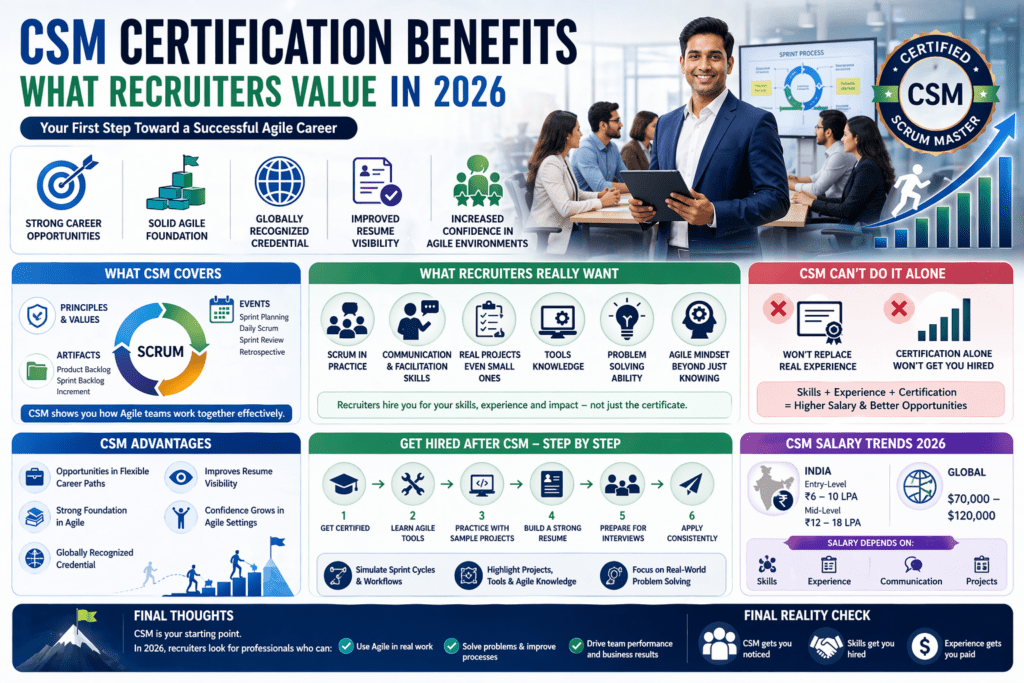
CSM Certification Benefits What Recruiters Value in 2026
Introduction
A first step toward Agile might be earning that CSM credential. It shows you’ve touched the basics. Some call it entry level others say it opens doors. Passing the course gives proof of knowing core ideas. Many begin here when shifting into flexible project work. The badge matters less over time but helps at the start. Learning happens fast during training sessions. People leave understanding roles and rhythms. Certification alone won’t change how teams operate though. Real skill builds later through practice.
Truth is, by 2026 things look different than expected
Just having a certificate isn’t enough to land a job.
Out here, job hunting looks different now. Forget handing over a shiny certificate – hiring folks care about what you can actually do.
They’re asking:
- Real Agile teams – how do they fit with your experience?
- Can you solve problems under pressure?
- Is it really possible to make deliveries work better?
Maybe skip wondering if CSM pays off. A sharper angle – what could shift if you tried it?
“What do recruiters expect after I get CSM?”
Here’s how it looks when we take a closer look.
CSM Certification Explained?
A beginner’s look at how teams work together might start here – Certified Scrum Master opens the door to Agile ways of thinking. This path shows the basics, not advanced tricks, just clear steps into Scrum practices. Learning happens through doing, guided by real examples instead of theory alone.
It Covers:
- Scrum principles and values
- One person keeps the team on track during sprints. Someone else decides what features matter most for users. A group builds the product step by step
- Events: Sprint Planning, Daily Scrum, Sprint Review, Retrospective
- Artifacts: Product Backlog, Sprint Backlog, Increment
In simple terms:
Working together well is what CSM shows about Agile teams.
CSM Certification Advantages
1. Opportunities in Flexible Work Paths
Some folks step into the Agile world through CSM first. It opens doors without needing prior experience inside that space. A few start here just to test how it feels. Others find their way later, after trying different paths. This path shows up often on resumes across industries now. Not everyone plans it, yet many land right there anyway.
Jobs you might go after include:
- Scrum Master (Junior/Associate)
- Project Coordinator
- Business Analyst
- Agile Intern / Trainee
Most useful when you’re facing situations like these
- A fresher
- From jobs without tech duties
- Moving from traditional project management
2. Strong Foundation in Agile
What happens when a team uses Agile? CSM shows the framework behind it. Clear steps appear, not just theory. Real practice takes shape through guided learning. Structure comes alive in daily actions. Understanding grows by seeing roles in motion. The method reveals itself slowly, piece by piece.
You understand:
- How to plan and execute sprints
- How daily stand-ups improve team alignment
- How retrospectives drive continuous improvement
When that base is missing, using Agile in actual work feels shaky at best.
3. Globally Recognized Credential
Across the globe, CSM ranks high among recognized Agile credentials.
Recognized in:
- India
- USA
- UK
- Europe
- Remote/global companies
Here comes a chance for new opportunities
- International job opportunities
- Remote Agile roles
- Freelance/contract work
4. Improves Resume Visibility
In 2026, companies use ATS (Applicant Tracking Systems) to filter resumes.
Many job descriptions include “CSM preferred” or “CSM required.”
Having this certification:
- Helps your resume pass initial screening
- Increases chances of getting interview calls
5. Confidence Grows in Agile Settings
Before work finds you, CSM’s already there – guiding steps, shaping choices, opening paths without noise or rush
- Speak Agile language confidently
- Understand team workflows
- Participate in Agile discussions
Interviews need that self-assurance. Confidence matters when you’re facing questions.
Recruiters What They Really Want
Most people mess up right here.
Recruiters don’t hire you because of CSM.
Getting hired comes down to your skills beyond CSM. What you bring later matters most. Not the title, but what follows shapes their choice. Future ability tips the scale. Past that certification point defines their interest. Your next-level know-how pulls weight. After-CSM strength is the real draw.
Let’s break down the key expectations:
1. Understanding Scrum in Practice
Job screeners check how you actually use Scrum day to day.
They may ask:
- What steps guide a sprint through to completion?
- How about when a sprint doesn’t work out? What happens then?
- How do you handle incomplete tasks?
Practical thinking matters more than perfect replies. What they care about isn’t found in manuals.
2. Communication and Facilitation Skills
Behind every sprint stands someone who clears roadblocks – less about lines of code, more about helping teammates move forward together.
Recruiters evaluate:
- How clearly you communicate ideas
- How well you conduct meetings
- How you handle different personalities in a team
Example:
Can you manage a dominant team member?
Is it possible to get each person involved when people talk together?
3. Real Projects Even Small Ones
Most folks figure three years is key – truth is, a little time counts more than none. Start somewhere small. Real work beats long waits every single go.
This can include:
- Internships
- Academic projects
- Case studies
- Mock Agile projects
Imagine a practice run, one where you:
- Create a backlog
- Run sprint cycles
- Conduct retrospectives
Small changes might shift things more than expected.
4. Tools Knowledge
Modern Agile teams rely heavily on tools.
Job finders look for knowing the essentials like: what you need to get started shows up here first
- Jira (most important)
- Trello
- Confluence
Here’s something worth noting:
- How to create user stories
- How to track sprint progress
- How to manage workflows
5. Problem-Solving Ability
The Core Job of a Scrum Master
Removing blockers and improving team performance
Recruiters test:
- How you handle conflicts
- How you resolve delays
- How you improve team productivity
Example questions:
- Start by noticing the pattern, not just one mistake. A quiet chat might reveal hidden struggles behind missed tasks. Watch how they respond when given clearer goals. Sometimes a different role fits better than pushing harder. Support matters more than pressure over time. Trust builds when help arrives before warnings.
- How do you handle disagreements between Product Owner and team?
This one trips up plenty of applicants right here.
6. Agile Thinking Beyond Just Knowing
This detail might seem small – yet it carries weight. What appears minor can still matter a great deal.
Recruiters look for:
- Adaptability
- Continuous improvement mindset
- Collaboration focus
Thinking like Agile matters more than following steps. A method becomes alive when the mind shifts first. Not every framework works unless people adapt internally. Change starts before any checklist appears. The real shift hides in how decisions get made daily.
What CSM Can’t Handle On Its Own
Truth is, it’s best to say exactly what we mean
Just because something happens does not mean work follows. A chance might appear, yet nothing comes from it. Outcomes depend on more than promises alone. Getting hired takes factors beyond this. Results often ignore what seems certain
It will NOT replace real experience
Just showing up does not mean mastery follows right away
Most people quit once they get certified – yet it’s exactly then that chances start slipping away.
Getting Hired After CSM
A step-by-step plan sits ahead. Follow each piece carefully. Move forward only when ready. This way works well for most people. Take it slow if needed. Each part connects to the next one clearly
Get Certified as a Customer Success Manager
Build your foundation.
Learn Agile Tools
Practice Jira, Trello, etc.
Practice with Sample Projects
Simulate:
- Sprint cycles
- Backlog creation
- Team workflows
Build a strong resume
Highlight:
- Projects
- Agile knowledge
- Tools
Prepare for interviews
Focus on:
- Scenario-based questions
- Real-world problem solving
Apply consistently
Start somewhere else if the first door stays shut. Try another path once the initial attempt fails.
CSM Salary Trends 2026
India:
- Entry-Level: ₹6–10 LPA
- Mid-Level: ₹12–18 LPA
Global:
- $70,000 – $120,000
Salary depends heavily on:
- Skills
- Communication
- Small projects matter just as much as big ones when it comes to experience
Final Thoughts
Starting with CSM Certification helps – though it’s just the beginning.
In 2026, recruiters are looking for professionals who can:
Use agile methods in everyday work
Fix issues with how people work together or how tasks are handled
Start moving teamwork forward instead of sitting through talks. Take charge where things connect, not just show up when called
Final Reality Check:
Notice comes easier when CSM is part of the picture.
Skills get you hired
Experience gets you paid